Eternal War
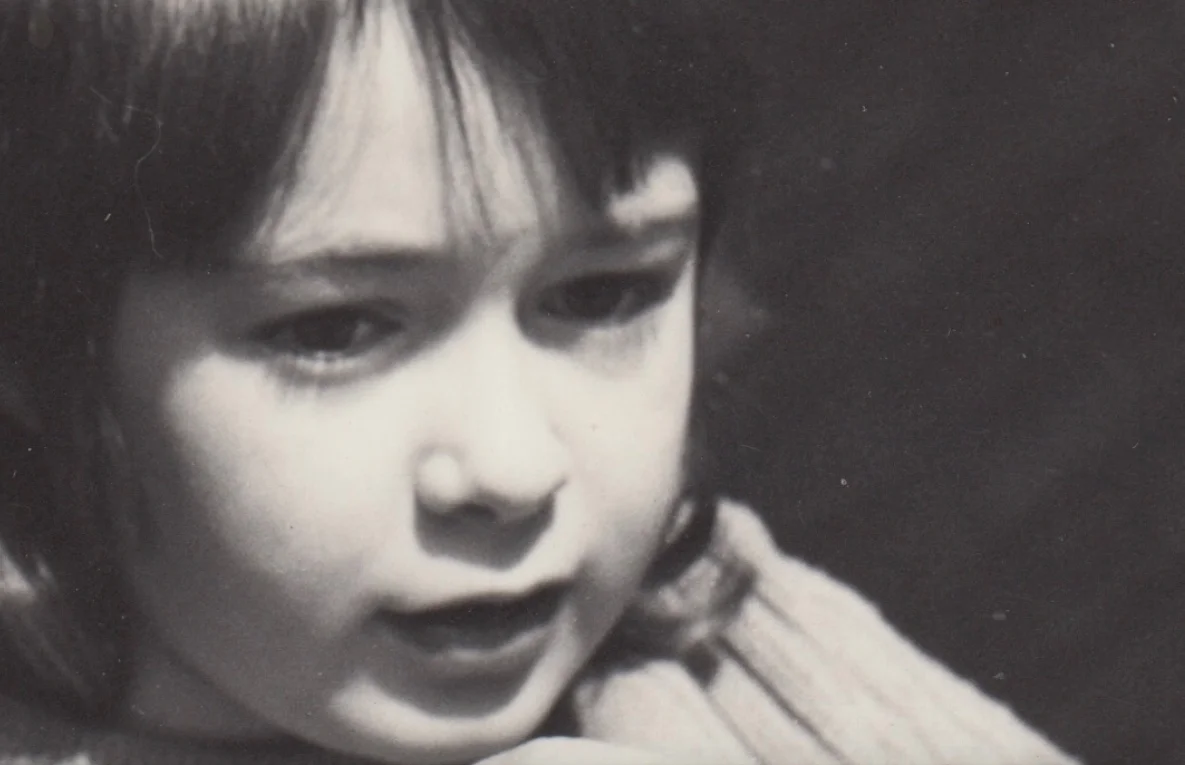
Recently, a young part inside of me was triggered. Perfectly benign interactions can send some parts into torment when a word or some other cue sets off an emotional repetition loop and that part, still stuck in a traumatic event from the past, activates and invades your entire body and mind. With awareness, this can lead to integration of the part and personal growth. When you hold on to the respect with one another, mindful of separating the present from the past, separating the hurt child from the conscious adult, anything can be worked out. Without awareness, it can create war.
Parts that are cut off from consciousness are often magnetically drawn to connect to others whose past experiences are emotionally similar. Through each other’s energetic aura, these parts blindly seek their way to healing.
Since these parts are not yet integrated, existing inside the energetic body but outside conscious awareness, they require self-inquiry, thoughtfulness about one’s own and the other’s feelings, and self-discipline. Initially it requires effort to remove the charge from the other person and focus on ourselves; do our own work. The young child within needs for us to become the safe parent they never had. Our parts only get lost inside dynamics with others because they have not yet been seen, heard, understood by a caring adult, and they seek that understanding by recreating the initial emotional circumstances with the purpose to find the outcome that they did not have initially, that they still need and will need as long as that part remains isolated and stuck.
In essence, all power struggles ensue from parts suspended in past trauma or unmet emotional needs. When we find ourselves in such a situation, there are only two choices as far as the parts are concerned: the first is to engage in a cycle that results in a repetition of the trauma as the victim, and suffer; the second is to engage in a cycle to avoid suffering and enter into the abuser role. And I am not speaking about actual abuse at all, only power dynamics between people that don’t even necessarily involve harsh words. The person taking the “abuser” role could, for example simply not return a greeting. If the person who said hello entered into a part that felt vulnerable, they might feel the hurt of rejection and perceive being ignored as one more confirmation that they are not lovable or worthy and get invaded by all the thoughts that were imprinted on the child’s mind who once was rejected.
The emotionally mature way is to look inside and stay respectful of oneself and others. By self-observance, the adult jumps in to prevent the young parts from usurping one’s entire being and expressing themselves outwardly, and avoid trouble. Let’s say that the person feeling rejected by not having their hello returned next lashes out against the other. Then, to continue with this banal example, the person who was avoiding the interaction might have done so out of fear of getting into any trouble at all, and also find themselves in a repetition of their childhood, seeing their fears manifested in the verbal attack. The roles may have switched, but the person lashing out has identified with a victim part and then allowed another “protective-contoller” part to attack.
By remaining mindfully aware of our own reactions and feelings, we can check if they are not commensurate with the current situation, because parts easily jump into action, whether they arise from “big T” or “little t” trauma.
In the emotional space of traumatized parts we can find all the harm in the world, from the smallest argument between two people to the great world wars. In the microscopic sense, young parts may say or do things that no one would perceive as hurtful except the other party in a particular trauma dance between two people. In the macroscopic sense, it is still similar, unresolved trauma, here expressed through greed and selfishness, that creates wars.
Primal reactions are provoked, cut off from the dysfunctional parental figures and redirected onto the object; a person, a group of people, or an entire population.
Unresolved feelings are evoked constantly, and we all end up in situations that are in and of themselves neutral, but are given emotional meaning by the parts inside us that are still stuck in their trauma and unmet emotional needs. As long as these parts are not integrated, as long as the underlying trauma is not healed, they may be intensely attuned and reactive to the minutiae of another person’s actions, or lose themselves in unending world politics that offer plenty of room for parts to emotionally engage.
Trauma means fear of death. “Big T” or serious trauma, leaves a child or a person in shock and usually dissociation occurs for survival, creating split parts that may not be aware of each other. The shock remains locked inside the body; for that part time stands still. Other parts surround the frozen part, such as instinctive reactions that are suppressed, parts trying to go on with life by gaining some control in the system and other parts that will seek to escape that control. However, “little t” or unmet emotional needs also remain in our system as different parts with different roles, just not as severely dissociated.
Little is known about emotional development, but common sense tells us that human babies are extremely vulnerable and need mothering nurturing and proper parental guidance in order to mature. In a decadent culture, that guidance is bound to go awry. In a satanic culture, parents are encouraged to be self-absorbed and self-indulgent. Incest and child sexual abuse are rampant; statistics only offer a glimpse of the abuse, only what has been reported: a small minority of cases. There are so many people walking around with unhealed “big T” trauma stemming from child sexual and other types of abuse, it is safe to say the world today runs on dissociation.
Most of us easily become identified with our parts and resort to interpreting others’ actions so as to re-experience or avoid some past hurt, in an unconscious attempt to complete the story. That story is always the same: in the past, there was no love, no understanding, no compassion for the child in a specific situation which may have repeated itself in many ways, by the same parental figures with their unique blind spots. A current circumstance or interaction calls up the past hurt. The parts are, in their unique and colorful ways, always trying to find that love, through acceptance, through being affirmed, through a positive response when in the past it was always negative. When the parts receive validation and reflection, healing occurs.
Parts seek power (control, escape) in reaction to the fear of some hurt being relived, or, they feel powerless, reliving the hurt in a new situation, disconnected from the original offense. Our self-created drama casts us either in the role of victim or abuser.
The question is: do we remain aware and mindful of our parts and have ways to bring the rational, compassionate adult back online? Or do we transgress and allow the young parts to take over and suffer, or lash out? Can we remain respectful to others? Or will that line get crossed - and if so - can we get back to a place of respect?
Someone I recently met in the context of my work bringing service into the New York prisons had young parts surface. My sex slave persona was gradually drawn in by the mix of his attraction (that made her come alive) and his good manners (that made her feel safe.)
After he voiced his desire to become romantically involved and I responded that I was not looking for a relationship, he expressed that he was fine with that. Sometime later he let me know about the other women he was focusing on. The graphic way in which he shared information had my young girl part experience the sting of betrayal as sharp as though no time at all had passed since my childhood, when an abuser first gained my trust and later had sex with my mother in front of me.
I struggled what what at first glance appeared like plain jealousy, and the feeling that I had no right to feel this way after rejecting his advances. While my sex slave part was acting up I fearfully focused on the man whom I had handed the power to hurt me this much. I struggled to hold onto the knowledge that he was nothing like an abuser. It was just that our internal parts were perilously rubbing off on each other’s pain. My instinctive reactions to my original trauma, frozen in time and space, were melting back to life, triggered by this circumstance of hearing this generally well-mannered person slip into another part describing women who had his interest.
The fear of feeling once again hurt and pain that was pushed down long ago in a current situation with someone causes loss of trust, which is what propels us into the power struggle, where parts take over. The power game only leaves winners and losers. The language of winning and losing is the language of power dynamics, rooted in unresolved trauma.
My adult never lost sight of the parts that were triggered, even though the feelings were incredibly intense. It took self-discipline to keep the focus on the little girl I once was, instead of jumping into a ready-made emotional drama with me as the disinterested party suddenly turned fiery with jealousy. Had I expressed any of these feelings it certainly would have seemed as if I secretly wanted to date this man.
The abuser from childhood made me suffer incredibly. My adult self knows boundaries and has compassion for the little girl inside. I stopped putting her in harm’s way long ago. I did not let young parts go off and get into a war with this man whose own cut off parts may have been activated by my rejection. Perhaps the triangulation was meant to make me feel jealous, and if I’d had low self-esteem it might have drawn me in. That is not important. What matters is that I’ve relieved my sex slave part from the burden of romance.
As my little girl integrates, I feel rather empty. She filled my energetic space with her attachment and her reactions of anger and pain, her prayers and her attempts to love more than required. The healing will fill the emptiness as my life energy will restore. She has been saved from the power dynamic.
Have you ever been around powerful people? The environment of power is this: cut off, emotionally immature parts floating through the ether, looking to get on the other side of the pain that their adult selves are not capable of feeling. Power is the mantle that protects traumatized parts. The addicts will refer only to the physical reality, while playing energetic power games with each other and anyone who can tune in - and create dramas for which they can never be called out. Their awareness of these energies, their ability to maneuver their parts, is their secret. The occult uses these energies for harm, with power games and spells, while the spiritual uses them for good, with prayers and loving thoughts.
Power addicts are lost in parts born in trauma and thus propelled into the win/lose game that creates power dynamics. Even though mind control uses trauma to create alters in victims, the perpetrators nevertheless have no understanding of the origin of these energies. They know the psychology of dissociation, yet they do not know themselves.
We can better understand power addicts by looking at our own relationships or circumstances in which young parts are triggered, when we give our power away and then try to recapture it, seeking to somehow get the upper hand.
Young parts play power games. Young parts form the power structure. Young parts need to win so others can lose. Young parts seek to rise through the power structure to be on top. Young parts protect the lie that we need this hierarchy. Young parts create wars.
Adults seek to heal trauma and have compassion for all those who are in need of healing, no matter the offense. Adults have clear boundaries. Adults know who they are. Adults make choices and hold themselves accountable. Adults have emotional room for others and can manage an egalitarian structure. Adults can bring peace.